

I’m always trying to relax, I’m always trying to wind down, always trying to find myself, be myself. Find the right warm seat in myself. But when I do that, I affirm the fundamental negation, that reality is otherwise. That it is unrelaxed, anxious, and tense. And I keep doing that, repeatedly. This is where I’m realizing all issues come from — the habits of the psyche, right? The psyche rehabituates itself to itself. And when it ‘locks in’ to certain habits, it wreaks havoc on everything else, because psyche-level habits have unlimited downstream effects. As potentially unforeseeable as they are potentially destructive. And this is precisely the same sort of movement when it comes to tics, right? Because habits of the psyche are precisely tics — just tics that are more socially acceptable, well-trained, more or less desirable. The kind of tics you don’t want are the ones where your face twitches, your hands twitch, your brain twitches — so to speak. The brain twitch is perhaps what happens in something like Tourette’s, where you have to say something, you just have to, and it comes out. But if everything is a brain twitch, or just a kind of tic, right, then it becomes a bit more apparent what I’m talking about here.
And here maybe we need a caveat — I am not discounting medical cases, not saying everything reduces to a tic. But a tic is the smallest absolute unit of the psychological loop — and in that sense, all differences between people are only quantitative, so to speak. The morally insane, the crazy, the suicidal person — they are only tuned to different degrees than the monk at a church. They aren’t qualitatively different, even if everything in us wants to believe so. You believe you’re different to the suicidal person you saw on the news. You believe you are different to Hitler, Mao, Stalin — at risk of sounding cliché — none of us are different, we’re all only tuned differently, in terms of quantity, never quality, right? You are the same as every traumatised patient who has ever been on Freud’s couch, on Lacan’s couch. Every single one of them. No one is ever qualitatively different — only quantitatively tuned differently. And what we call qualitative difference is just a symptom of quantitative hierarchy. If it were possible — and maybe it is — one could quantify all the elements of the human mind, body, and psyche, and render a bell curve. Wherever there is a peak, the tics should naturally follow.
So everything is a habit. But not all habits are destructive like depression or Tourette’s — what is the opposite of destructive here, is it not instructive? In the sense that the habit is an affirmative loop that compounds and works to the benefit of the subject. Loops have given rise to all the good, beauty, and truth of humanity. But all loops have a dark side. A shadow, so to speak. There are no perfect loops in nature. Perhaps this is the one-liner that can be the grounds of everything I’m saying here. There are no perfect loops in nature. And so when I’m always seeing myself as needing to relax, I’m affirming myself as fundamentally unrelaxed and unsettled, right? ‘Impact’ and ‘hustle culture’ are two sides of the same coin. What destroys me is what allows me to achieve, to accomplish, to go out there and get shit done. But for the need to relax, anxiety becomes the shadow. And this is what’s been happening in my — let’s say the past year or so — where certain things have led me to be slightly more psychosomatically self-aware in a negative way. I don’t want to go into too much detail. But this is where transformation or ‘healing’ looks like a critical reframe.
The first bait I can dangle for myself and see if something in me picks it up is this: what if the trauma is not that I’m fundamentally tense, wound up, anxious, and need to relax? What if the trauma is that fundamentally I am not doing enough, or not doing what I need to be doing with my life, or feeling what I need to be feeling deep within? You sense I’m going down a questionable track, perhaps reinforcing the wrong kinds of behaviour. But loops do not expire — they only get sublated into superior loops. So the question becomes, what loop is superior to the one of mindfulness or presence-seeking? And here the question turns the loop from presence-seeking into a kind of psychological excavation — with the implicit understanding that whatever the superior loop is, it will come with its own dynamic of instruction/destruction. Because self-awareness is, after all, itself an imperfect loop bearing its own instruction/destruction, right? Self-awareness breeds self-consciousness. Self-consciousness breeds infinite regression — because a lot is happening unconsciously, and becoming conscious is not so much awareness as it is a kind of motor interruption — and one eventually slips and loses oneself, continually. The loop of self-consciousness shows its face as being destructive as much as it is instructive. Like a philosopher who tries to understand not only everything, but his own terrible need to understand, and in doing so falls into a kind of intellectual cancer. Like a poet who continually searches for something higher and more profound but continually hits his head on an invisible wall. Perhaps he discovers God, but as he does, he also discovers the devil.
Heidegger posits the clearing — where we dwell in the silence, in almost an eastern religious sort of way. Buddhism, meditation, all that jazz. But when you are dwelling in the silence, are you really just being mindful, or is it yet another imperfect loop? Because there are no perfect loops, right? There is peace and rest, and I just ought to dwell in it. But then this becomes monstrous — I need to dwell, I need to dwell, I need to dwell. Back to square one. Within the loop sits something destructive as much as something instructive. So the answer isn’t more awareness, more mindfulness, more inwardness. It’s always in a certain kind of redirection, which the behaviorists understood very well. A ‘reframe’ in common terms, or a ‘transformation’ in spiritual terms. And something of it always leads back to our plasticity — the fact that we are eternally changeable, no matter what happens, no matter how sick we are, morally, psychosomatically, mentally, spiritually. Something can change. And it’s always this breath of fresh air — the aeration of possibility, so to speak — that causes the imperfect loops to loop up on themselves and short-circuit, potentially leading to a wider, bigger one that encompasses and sublates the prior. But the sublation is never without contradiction in Hegelian terms, which is to say the sublation is never without the same dynamics of instruction/destruction. This is what Freud calls the duality of the pleasure principle and the death drive, the life drive and death drive, right? Every loop that affirms life is never without its shadow, the loop that affirms death. No loop is free of the other.
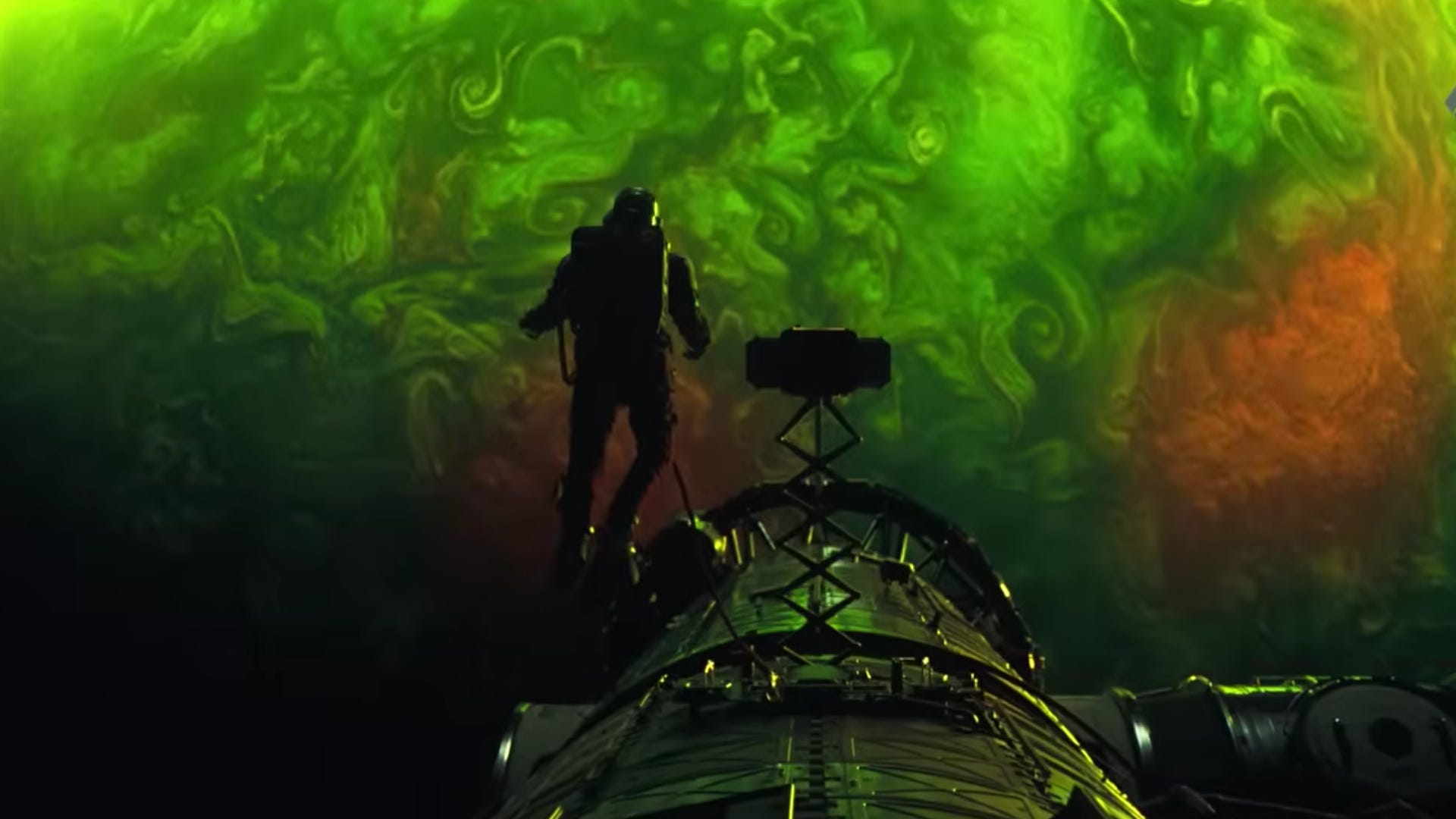
Take cancer. Cancer is this drive rendered in purely destructive terms, right? But if we think about it agnostically — cancer is not only destructive, it’s also instructive. Cancer is its own form of life. And this is where the new film Project Hail Mary (no spoilers) does something interesting — the astrophage is exactly like cancer in that it spreads, but the movie renders it at a cosmic level, which makes it a bit less personal and a bit more cosmic. So it isn’t so touchy in terms of ethical feeling and all that. It renders the cancerous as almost completely indifferent. It doesn’t care about us. It just happens. It’s got its own life. We don’t know what its interests are, but we can kind of surmise that it has interests — though that might just be our own projection. Maybe it’s just spreading for the sake of spreading, like a Darwinian gene. In any case — a tic is a tic. It’s a life of its own, in the absolute smallest unit, within the psychological universe. And so a cancer is basically a tic that spreads, that affirms itself, indifferently, multiplying until it becomes a core loop — which carries its own instruction and destruction per se.
And this also means something even for something as innocent and upright like creativity, right? Creation is its own kind of loop, just seen in a positive light, and this is what Deleuze saw so well. When we have a sense of a certain idea or feeling or thought as something that can be transmuted or transfigured into creation, then the loop arrives that turns the battleground — God and hell, the world that comes to us as a tic, or as a multiplicity of tics — into a matrix of profound generativeness, which Deleuze calls the ‘virtual’. As if reality shapeshifts from a Lovecraftian monster into a set of piano keys. It retains the horror, but what is new is the infinite playability. This is why the artist always has something that everyone else does not. The artist has something that the moralist does not — because even if the world is unplayable, it ultimately communicates itself to him as infinite playable. The unbearableness becomes a fragment of its own playability. Now, it does not mean that everything would suddenly become bearable in that very instant. It does mean that creativity, the attitude of the artist, is the embodied posture of one who sees the possibility of possibility in all things. Hence the genius of the artist — not in fact his own genius — but a genius of his fidelity to chaos, and chaos in fidelity to him.
And so I suppose where that leads us is not just to be open to what might be — to the dangerous maybe, or what Caputo calls the ‘perhaps’ — and to be self-conscious in a minimally destructive sort of way. But still, one cannot minimize self-consciousness in the same way one cannot not hear things, right? It’s possible to look away from something to negate it, as Nietzsche says, but it’s not possible to unhear something. Once something is heard, it is known. When something is known, or heard by knowledge, it is thereby rooted in the ground of knowledge — as an opinion, a feeling, a sense, a vibe, right? A ghostly set of immanent tics! When it instructs, it immediately destroys. And so where that leads us — I don’t know, shockingly — but that’s where God comes into the picture. We are never ourselves, on our own. The loops are not ours to create nor ours to remedy — they are the battleground of God and the devil, which is awake and active at all times, instructing and destroying even when we are asleep. Prayer is simply the insistence to opening up to the possibility of possibility — of being saved from ourselves — even if being saved means we are still caught within the same loops and their instruction/destruction. But post-salvation, those loops are never final in their instruction/destruction. Something always comes and changes it. And that is where God alights from the seat in which he is absconded, to arrive on the scene and perform an insurrection, from within as much as from without.
Indeed, there are no perfect loops in nature, and this is something Nick Land got right. Because while all philosophers since Kant have been theorizing about what we know, what we can know, and what we can’t know — as if we are the origin of all things — what Land chanced upon, or nailed upon vehemently, as if a heretic prophet, was that everything comes from outside, even if outside is inside and inside is outside, and not from us. That means everything is, as he says, ‘providential’. And acceleration is — to me, in my interpretation — the speed of receptivity at which we receive, accept, and embrace that which is hurled toward us. And obviously, where we are caught in the battleground between God and Satan, heaven and hell, we are always subject — subject to instruction/destruction — and there and then we find cover, we find protection, we find grace, we find mercy, however we do, as much as we find ourselves in the crossfire. And to say that God always wins, to say that God is victorious, is to say that no matter what happens, possibility always wins in the end. And the insurrection that comes from outside, that enters through the inside — it’s always the best that it could have been for us. This is what it means to say this world is the best of all possible worlds like Leibniz, which is to say this reality is the best of all possible realities, which is the same thing as saying my being who I am as of today is the best of all possible beings. Not because I am perfect, but because I am where I need to be.
And here is where all those clichés come into the picture as something absolutely correct, even if not actually deeply thought through. All coping mechanisms, in this sense, are the coping mechanisms of the one caught in the crossfire and absolved by one “learning to see what is necessary in things”, as in Nietzsche’s amor fati — which is only intensified in the amor fati to oneself. Or, if you were to transfigure the coping mechanisms from death-talk to life-talk — there and then the coping mechanisms appear as affirmations. Affirmations of grace. Affirmations of one in radical receptivity. Affirmations of the one who lives at the absolute speed of receiving everything that throttles towards him, and who is graced by the insurrection of providence at the end of the day. In other words, there are no perfect loops in nature, but grace is the absolution of knowing that the loops can always change for the better, right? Old traumas can be replaced with newer, better ones. And even if it is absolutely incredulous to say — tomorrow there will be a new dawn. But it should be clear by now, with this hope, all this life-talk or yes-talk — yet another millenia-old psychological habit — comes the inevitable malady of instruction/destruction. With God comes the abyss. With hope comes hopelessness. With meaning comes meaninglessness. With relaxation comes anxiety. And this whole monologue, well — it’s not spared from it either. Is there however the possibility of an insurrection within this loop of loops? Perhaps — and this is the point at which I should just stop talking.